

Anchors Aweigh: How to Choose Your Anchor
News
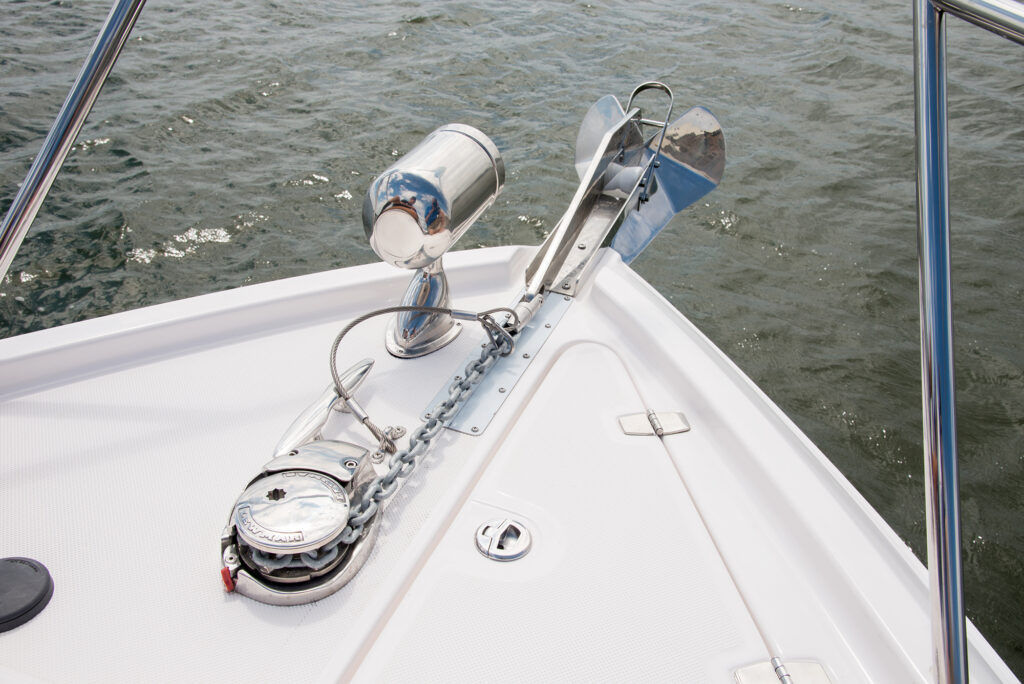
One of the first decisions new boat owners must make is the anchor. Knowing how to choose your anchor is essential, as being able to stop in place out on the water is important. You might want to stop in a pretty cove and have lunch, or you may wish to spend the night there. You might have a favorite fishing spot where you’ve been lucky in the past and want to toss out your line there again.
And there may be emergency situations when you want to stop the boat in the face of gusty winds or high wind-driven waves to take care of emergency problems.
To do any of that, you need a good anchor suitable to the bottom conditions and of a suitable size and weight to hold your boat in place. Along with a suitable amount of ‘rode,’ or length of rope and chain attached to your anchor. Learning how to choose your anchor correctly will make all the difference in safety and peace of mind on the water.
The first choice to make is the kind of anchor to buy. And there are options. If you’re wondering how to choose your anchor, here are some of the most common types:
The Bruce or Claw anchor
One of the most popular anchors among recreational boaters, the Bruce anchor was developed in the 1970s by the Bruce Anchor Group. It is an excellent all-purpose anchor that performs well in various lake bottoms, including mud, sand, rock and coral. It has a harder time penetrating surfaces such as clay and bottoms covered with heavy grass. The three-claw design sets more easily than some other kinds and resets easily if it is broken loose.
On the downside, the Bruce/Claw has a lower holding power per pound compared to other types of anchors, so you may need a larger or heavier anchor of this type.
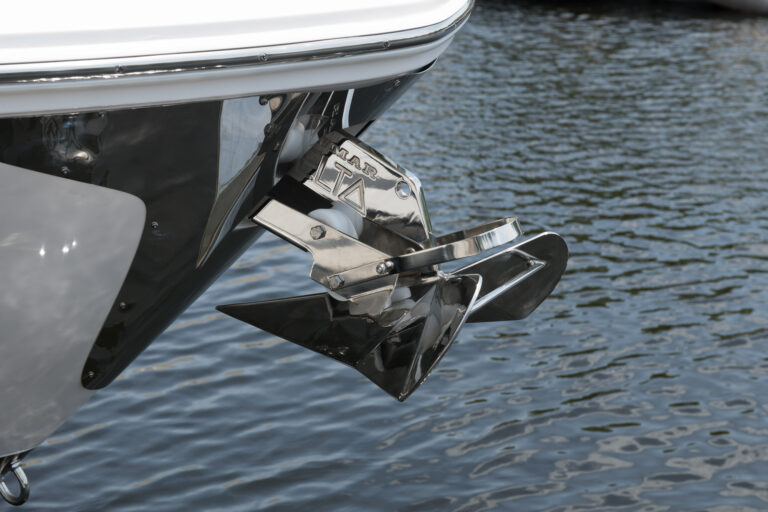
The CQR/Plow/Delta wing anchor
These anchor types are “plow” designs, some hinged. It is one of the oldest styles, dating back to the 1930s. It has a relatively low holding power rating compared to others, but the hinged design makes it more responsive to wind changes.
These anchors perform well in most bottom conditions and have about 50% more holding power per pound than the Bruce models.
Danforth or Fluke anchor
One of the most popular anchor choices, the Danforth performs best in sand and muddy bottoms; less well in other bottoms. It stows easily on most bow rollers.
Mushroom anchor
Shaped like a mushroom, this anchor works well for smaller boats and fishing boats that make short stops for a short amount of time. It works best in soft, muddy bottoms.
Here in Colorado, our reservoir bottoms, especially in man-made reservoirs, tend to be sandy and muddy, as opposed to rocky—an important consideration when deciding how to choose your anchor for local conditions.
Holding Power
The holding power of an anchor is the amount of pull force the anchor must withstand to hold the boat in place. It is formulated based on environmental factors, such as wind. (Other factors, such as tides or river currents, are not as much in effect here in our Colorado reservoirs.)
As a general rule, a holding power of 90 pounds is sufficient for safely anchoring a 20-foot boat in winds up to 20 mph. In the same wind speed, a holding power of 125 pounds is sufficient for a 25-foot boat.
Anchors that rely only on their weight—such as a mushroom anchor—are only capable of generating more than twice their weight in holding power.
Anchor weight is also an important consideration. You don’t need much weight to hold a boat in place in a quiet cove, but you will need weight in an emergency situation in gusty winds.
One consideration is carrying two anchors: using a smaller “lunch hook” for short anchorages in calm water, with a larger anchor for overnight stays or in heavy wind conditions. Two anchors can also be beneficial if you own a ‘high-profile’ boat like a pontoon, which can be affected by winds.
But holding power and weight are only as good as the anchor’s ability to penetrate the bottom. Most anchors can dig into the typical Colorado bottoms of hard sand and mud. Understanding how to choose your anchor for the right holding power ensures your boat stays secure, no matter the conditions.
Anchor Lines: Ropes and Chains
Your anchor will only work as good as the lines connecting it to your boat. Anchor lines should be chosen according to your boat size, weight, and type.
Three-strand twisted nylon can retain holding power amid the constant tugging on the anchor line.
Chain should be used for the first length connected to the anchor itself: it adds additional weight while the short length makes it easier to pull up. You should have one foot of chain for each foot of boat length.
The ratio of anchor line is seven feet of length for each foot of anticipated water depth. Thus, you would need 70 feet of anchor line for anchoring in 10 feet of water depth. And the hardware tackle connecting the line to the anchor should also be in good shape.
Choosing an anchor for your boat doesn’t have to be stressful! If you purchase your boat from Colorado Boat Center, we will go over all the options with you and show you how to choose your anchor for your specific boating needs.
But we can provide good anchoring advice for all our customers. Give us a call or stop by and we’ll help you find the perfect anchor for your boat and boating adventures.