

What Boaters Need to Know About Invasive Species in Colorado
News
Colorado and other Western states have been conducting a battle against ANS – Aquatic Nuisance Species – for several decades. ANS are plants, animals, and organisms that are not indigenous to the western United States and have the unfortunate propensity to rapidly reproduce in our waters, fouling water intakes, boating and fishing gear, engine parts, and also affecting water quality while dominating the aquatic ecosystems. Understanding invasive species in Colorado is critical for all boaters who enjoy lakes and rivers in the state.
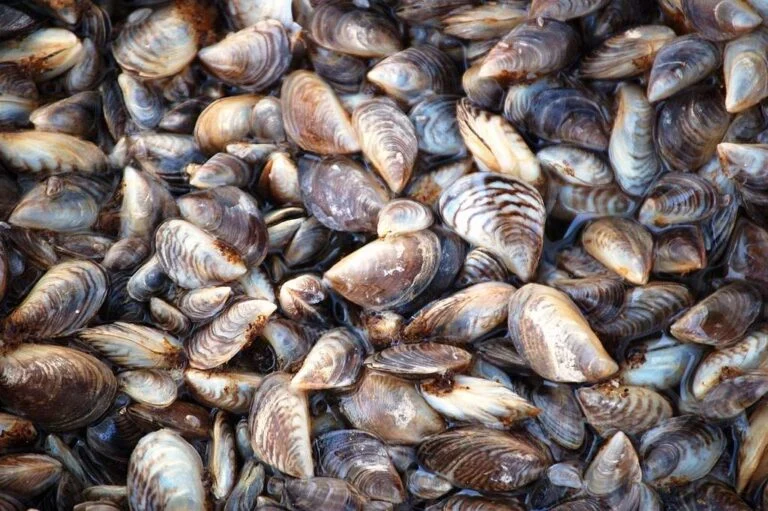
Among the most prevalent species we are guarding against are the zebra and quagga mussels. These small animals begin as microscopic larvae invisible to the human eye, but once they start reproducing, they quickly clog water intakes, underwater structures, and engine parts like propellers and impellers. They also severely impact the ecosystems of the lakes they invade. Learning to identify invasive species in Colorado like these mussels is essential to prevent the spread.
Other ANS species include:
- New Zealand mudsnails (NZMS): They compete with native mussel species and invertebrates like mayflies, caddis flies, and other aquatic insects, which are prime food sources for our native trout and other fish. NZMS are females that reproduce through cloning, so even one can lead to an entire infestation. They can also be introduced by fishing gear.
- Eurasian watermilfoil (EWM): This noxious aquatic weed forms dense mats that impede swimming, fishing, and boating, while choking out native plants and impacting native fish and other species. Any fragment of EWM introduced into a new water source can begin reproducing.
- Rusty Crawfish: These aggressive little beasts voraciously eat small fish, insects, fish eggs, and underwater vegetation that native species rely on. They have been introduced by anglers who toss unused bait into the water.
- Waterflea: These zooplankton aquatic crustaceans out-compete native fish for food and can clog fishing gear.
To ensure these and other invasive species in Colorado do not enter local waters, the Colorado Parks and Wildlife Department requires regular inspections of boats that are trailered and launched in Colorado lakes and reservoirs.
All motorboats and sailboats must have an ANS stamp prior to launching in Colorado waters.
How to Obtain an ANS Stamp:
- Boat owners who reside in Colorado can purchase the ANS stamp at the time of registration. The cost for in-state residents is $25.
- When in-state residents renew their registrations, the ANS stamp is added to the cost.
- Boat owners who are non-residents of Colorado must obtain an ANS stamp before launching their boat in Colorado waters. Stamps can be purchased online, at any CPW office, or at cpwshop.com. The cost for non-residents is $50.
All boat owners must purchase the ANS stamp, and operators must retain proof of purchase (electronic or printed receipt) on their person, or on the motorboat or sailboat, when operating the vessel.
Inspections
Your boat must be inspected periodically to ensure that ANS and other invasive species in Colorado are not present.
- If your boat has been launched or was purchased out-of-state, it must be inspected prior to launching it again in any Colorado lake or river.
- Your boat must be inspected before launching and when leaving any Colorado reservoir or lake that has an inspection station on site.
- Your boat must be inspected upon request of any Colorado peace officer or authorized agent.
Decontamination
If your boat has been inspected and ANS species are detected, your boat must be decontaminated before it will be allowed to launch in any Colorado lake or reservoir. This is usually accomplished with a power washing of the hull with water at 140–160 degrees.
The CPW maintains 72 decontamination and inspection stations around the state. Visit the CPW website to find one near you.
Note: Colorado Boat Center has two certified inspectors on site and provides decontamination processing of your boat if necessary.
Do your part to keep our beautiful Colorado waters free of invasive species in Colorado. Power wash your boat’s hull regularly and keep your ANS certificates up to date. Understanding and following these steps ensures we can all enjoy clean, healthy lakes while preventing the spread of invasive species in Colorado.