

How to Clean a Boat the Right Way
Articles
Avoid Damaging Modern Materials
How to clean a boat has changed with modern materials, here’s what Colorado boaters need to know to adapt their cleaning routine and protect their investment.
We get this question constantly, usually right after a long day at Horsetooth Reservoir or Carter Lake when the sun has baked everything into the seats. What is the best way to clean my boat??
The surprising answer in 2026? Less than you think. Modern boats aren’t built like they were 10–15 years ago. The cleaning materials that used to work can now quietly damage your interior over time.
The Materials Have Changed, How to Clean a Boat Should Too
If your boat has newer upholstery like Cool Touch or Ultra Touch vinyl, you’re dealing with a completely different surface than some older marine interiors.
These newer materials are engineered with built-in UV protection and heat management technology. That’s why your seats stay cooler in the middle of a Colorado summer, but it also means they don’t respond well to aggressive cleaners.
What we see in our service department is consistent: the damage rarely comes from neglect. It comes from over-cleaning with the wrong products.
The New Rule of How to Clean a Boat: Keep It Simple
We recommend starting with the most basic solution possible and sticking with it.
A mild, dye-free dish soap mixed with warm water (about a 30:1 ratio) is still the safest and most effective option for routine cleaning.
Use a soft sponge or microfiber cloth. Wipe gently. Rinse thoroughly. Then dry with a clean microfiber towel.
That’s it.
No heavy protectants. No layered chemicals. No aggressive scrubbing.
“Modern boat vinyl doesn’t need stronger chemicals, it needs smarter care.”
What to Avoid (Even If You’ve Used It for Years)
This is where most boat owners get tripped up because a lot of the “go-to” products used for years are no longer recommended on newer materials.
We routinely advise against:
- Harsh vinyl cleaners
- Bleach-based products
- Solvent-based cleaners
- Abrasive pads or scrubbers
- Magic erasers on vinyl surfaces
Even popular marine products can be too aggressive for modern interiors and upholstery. Over time, they can break down the protective layer that manufacturers have already built in.
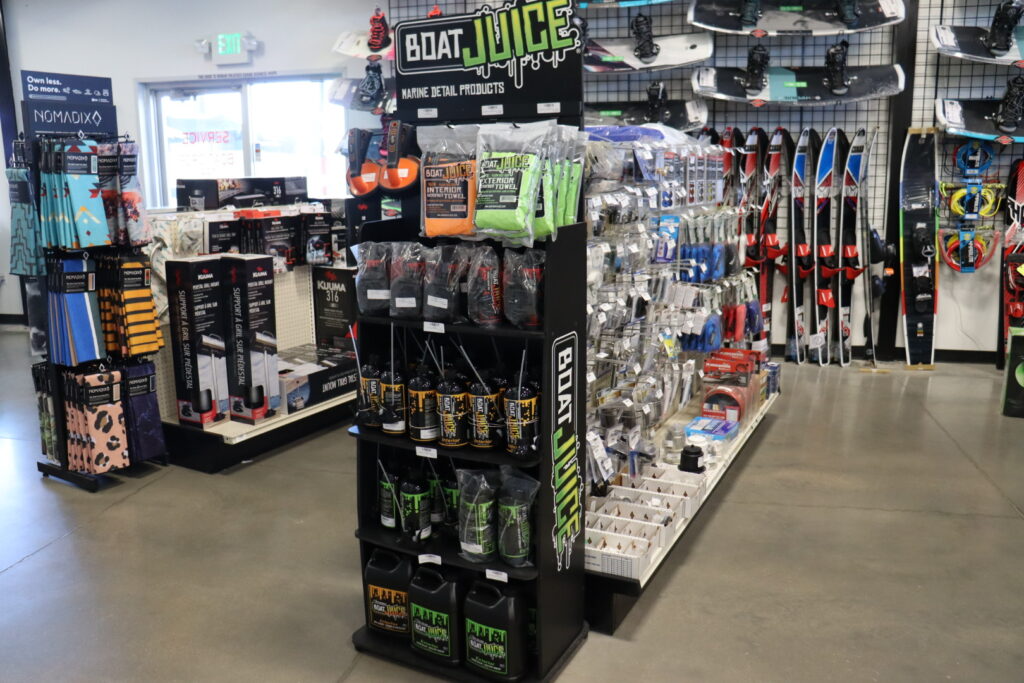
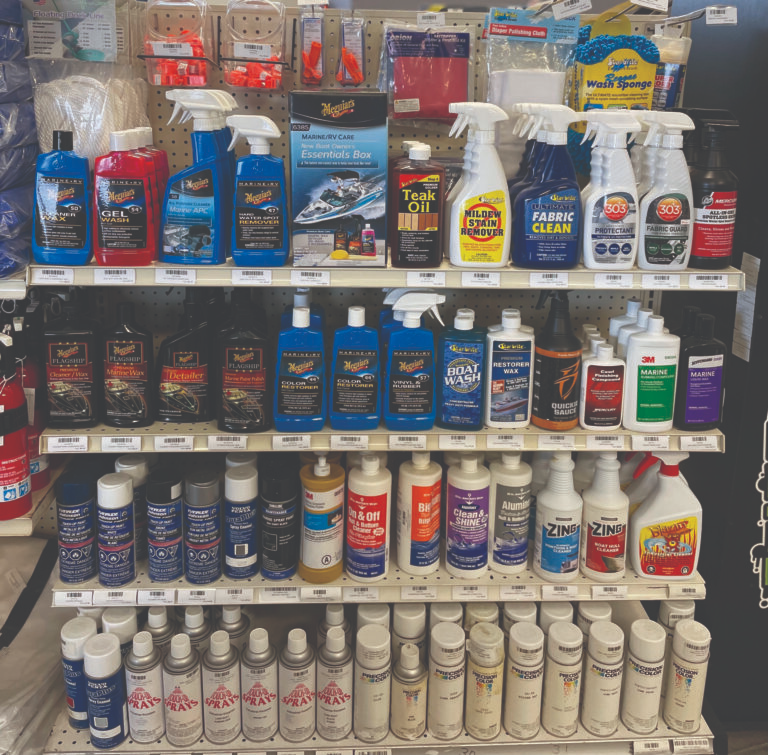
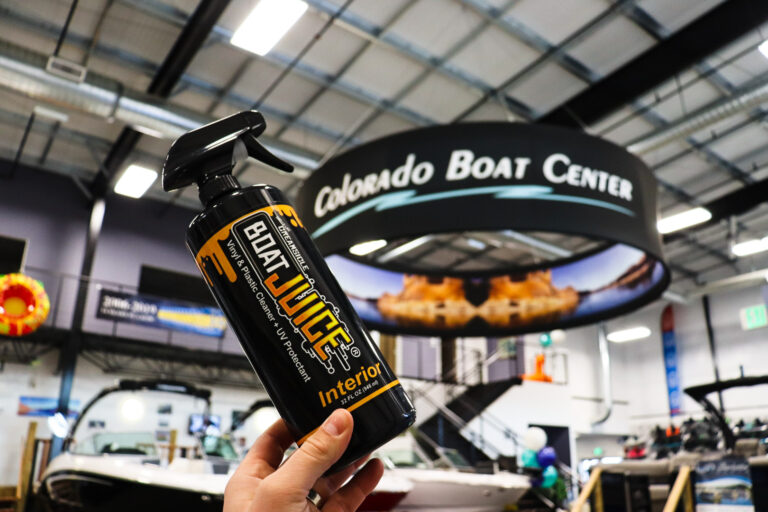
If you’re unsure, test a small hidden area first, or stop by our parts and pro shop and we’ll point you in the right direction.
What Actually Works (Day-to-Day Cleaning)
Understanding how to clean a boat properly means focusing less on doing more, and more on doing it consistently.
Around here, a typical lake day doesn’t end when you pull out of the ramp. It ends when the boat is wiped down, dried off, and ready for the next trip.
A simple workflow:
- Remove gear and towels before cleaning
- Use your soap-and-water mix with a soft cloth
- Rinse lightly (hose or low-pressure spray)
- Dry everything thoroughly with microfiber towels
The key is not letting residue sit. On hot summer days along the I-25 corridor, anything left on the surface can bake in fast.
The “Onboard Habit” That Makes Everything Easier
One of the best habits we see from experienced owners, and a key part of how to clean a boat properly, is keeping a spray cleaner (filled with the soapy solution) and a microfiber towel onboard at all times.
Quick wipe-downs during the day, after spills, sunscreen, or wet gear, prevent buildup before it becomes a problem.
It’s a small habit that saves you from heavy cleaning later.
Exterior Cleaning: Keep It Controlled
For deeper cleans, the same philosophy applies.
Use a soapy bucket, soft materials, and controlled rinsing. A light power washer can be used, but keep your distance, especially around seating and upholstery.
We also recommend avoiding direct sunlight when possible. Soap that dries on the surface can leave residue and streaking, especially on darker finishes.
Water spots are another common issue in Colorado due to mineral content. A light vinegar dilution can help on exterior surfaces. Keep it away from vinyl and use sparingly.
Real Talk: You Don’t Need a Deep Clean Every Trip
You don’t have to do a full scrub-down every time you go out.
But consistency matters.
Growing up in this business, our founders had a rule: clean the boat before you leave, and clean it again when you get back. At the time, it felt excessive. Now, we understand why.
When you stay ahead of it, cleaning becomes faster, easier, and far less aggressive.
Why This Matters in Northern Colorado
Boating here is different than in coastal environments. You’re dealing with freshwater reservoirs, trailering between lakes, and intense sun exposure at elevation.
At Horsetooth Reservoir and Carter Lake, we see the same pattern every season: boats that are lightly maintained last longer, look better, and hold value better.
It’s not about the color of your boat or the brand of your cleaner. It’s about consistency.
Before You Cover the Boat
One of the most overlooked steps is drying.
Before you put the cover on, make sure everything is completely dry; seats, compartments, and storage areas.
Moisture trapped under a cover is the fastest way to create mildew. And once that sets in, it’s much harder to reverse.
When to Ask for Help
If you’re dealing with a stain, cut, or tear, don’t jump straight to aggressive DIY fixes.
In many cases, vinyl can be repaired. Our boat service department works with professional upholstery specialists who handle everything from stain removal to seam repair.
If you’re unsure, you can always contact our team or stop by, we’d rather help you early than see avoidable damage later.
Frequently Asked Questions
Q1: Can I use Magic Eraser on boat seats?
Usually, no. Magic erasers can be too abrasive for modern marine vinyl and may damage protective coatings.
Q2: What is the safest cleaner for boat vinyl?
A mild, dye-free dish soap mixed with warm water is usually the safest option for routine cleaning.
Q3: Should I pressure wash boat seats?
Avoid pressure washing upholstery directly. If using a light power washer on exterior surfaces, keep distance and avoid seams, seats, and delicate materials.
Q4: How often should I clean my boat?
A light wipe-down after each trip is better than aggressive deep cleaning later.
Q5: How do I prevent mildew under a boat cover?
Dry seats, compartments, and storage areas completely before covering the boat.